LYRIC!
Some recent favourite song lyrics—and what makes lyrical form different from poetry.

During the pandemic years I worked as a high school librarian in Auckland. I helped out with some NZQA Scholarship teaching, and once led a discussion among students planning to sit the English Scholarship exam about whether they could get away with writing on song lyrics in a poetry essay. Modern confessional poetry, with its focus on intense individual experience, can trace an origin to Ancient Greek lyric poetry, which was sung in first person (using “I”) and accompanied by lyre playing.1 Contemporary song lyrics and poetry both derive from creative traditions like this that involved performance, not writing. Just because two things share a common ancestor doesn’t mean they’re the same, however—so if you take the risk, I told the students, make an argument that the lyrics you’re talking about function like poetry should. Show that they play with language, create images in the mind’s eye, and make emotional impressions.
I struggle to read poetry partly because I’m full-up on lyrics that are successful in this way. And lyrics have an advantage over poetry: they’re often more narratively spare. Because vocals compete with other instrumentation for time and audibility, and there’s commercial pressure for a track to appeal broadly, context clues you might find in poetry or prose can be absent. There’s the suggestion of relationships and settings, allowing the listener to add their own story—the best love songs feel like they’re written about you specifically, right? Or absence of detail offers the thrill of fantasy or horror, like in Brian Eno’s The Belldog (an honourable mention absent from the list below): Most of the day / we were at the machinery / in the dark sheds / that the seasons ignore. Lyrics are so emotionally satisfying because they let you co-create their meaning. Below are some I’ve been thinking about lately, and what I’ve made of them.
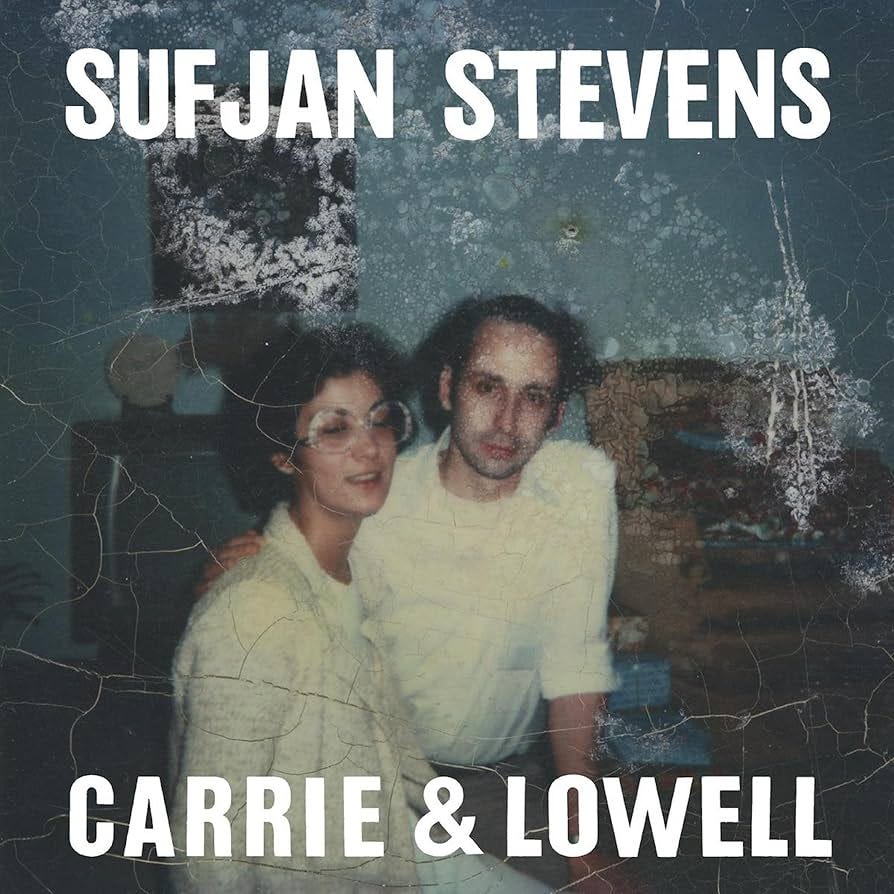
When I was three, and free to explore / I saw her face on the back of the door / Oh, be my rest, be my fantasy — Sufjan Stevens, Should Have Known Better
Sufjan Stevens released Carrie & Lowell ten years ago, and wrote its songs in the wake of his mother’s death from cancer in 2012. Earlier this year he told NPR he was “kind of embarrassed by this album, to be honest with you,” because of the way he speculated on his mother’s life to make sense of her death through music, turning grief into a record of “self-loathing and misery”.2 I hadn’t realised his mother had abandoned him and his siblings when he was one year old. Any childhood memories of her in Carrie & Lowell are probably a historical fiction. I doubt Sufjan Stevens’ fans will be put off by his shame: he himself admits that “music has a consciousness beyond me [and] my failed intentions”. The art we make in grief is not really about the person we are grieving: it is about ourselves, and this is normal. It is also normal that when we consume art about death we think about our own relationship to it.
When I listen to this song I think about my maternal grandmother, who died of pancreatic cancer when I was six. Before she and my grandfather died my parents would drive us north in the summers to visit them in Whangārei. There was a Picasso somewhere in their house, a print of The Weeping Woman.3 This was the face I could have seen on the back of a door when I was three—broken and frightening, a harbinger of what would follow. Grief in childhood is met by a lifetime of seeking safety, the feeling of that golden time that death had not yet broached. Sufjan Stevens sought rest in a fantasy of his mother’s life. There is a playfulness in the internal rhyme of the lyric: as three mirrors free in the middle of the line I imagine a child turning round, their motion bookended by the disparate sounds of the line’s beginning and end. It’s not a sentimental song to me—just honest in its desire for love.
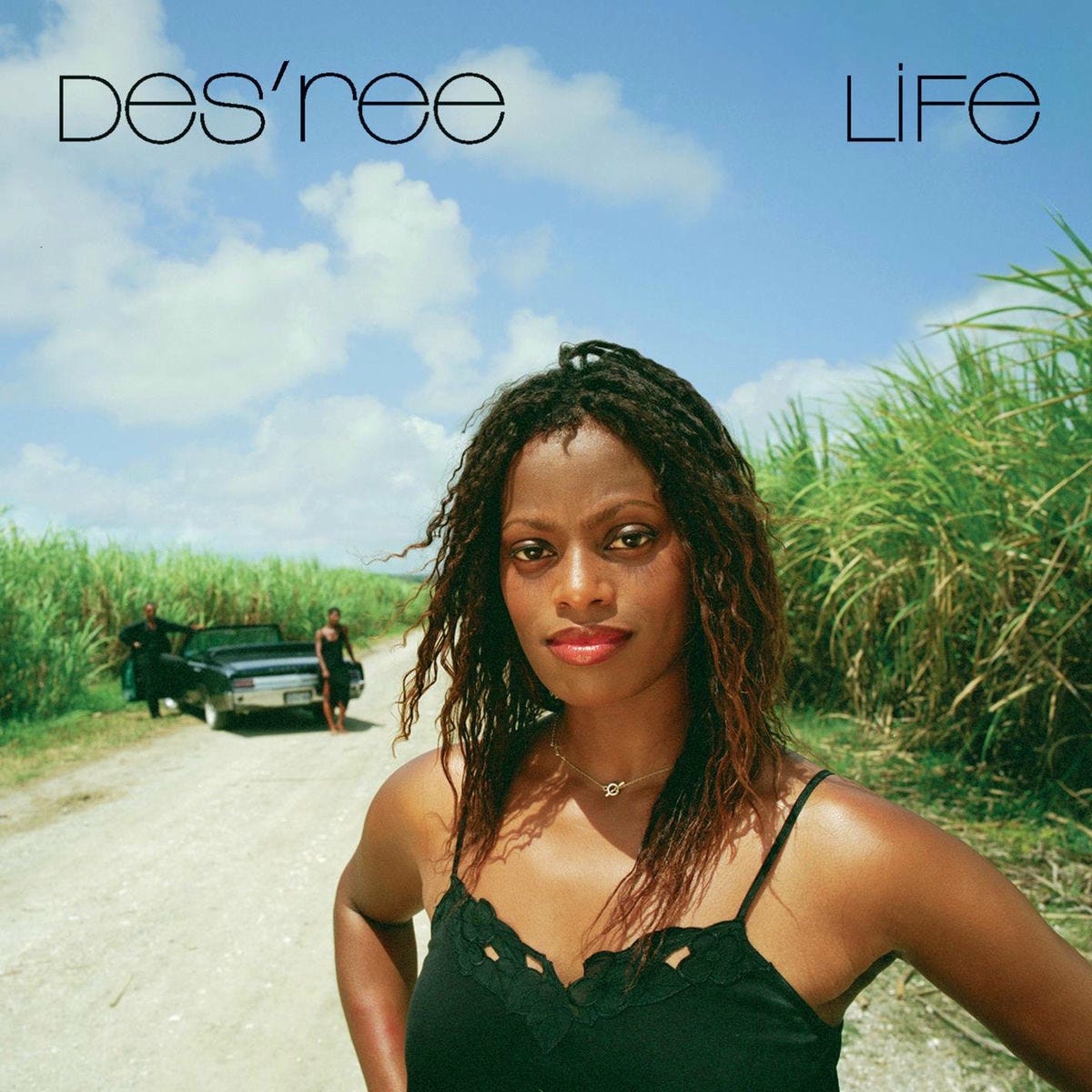
I don't want to see a ghost / It's the sight that I fear most / I'd rather have a piece of toast / Watch the evening news — Des’ree, Life
Sorry for the tone shift—these four lines were voted the “worst ever pop lyric” in a 2007 BBC poll.4 I heard Life in a Coles in Naarm recently and had one of those r/tipofmytongue moments, Googling the words until I hit the right tune. These are crazy lyrics. But they’re also—so real? There’s something about them that reads what the hell, sure to me—those end-of-line rhymes are so plain they feel deadpan.5 The world is fucking ridiculous right now.6 I’d rather not deal with people who don’t get this, or recognise the power imbalances between themselves and others, actually? (See: bad managers, my landlord, this Hobson’s Pledge guy).7 I’d rather have a little head-empty toast moment. (For those overwhelmed by news of what’s happening in Gaza, a reminder that aside from supporting efforts to sanction Israel, you can donate to local food distribution services like @gazasoupkitchen, @grassroots_gaza and @thezaynabproject).8
The rest of this song is wild. Who is this woman who in one breath is a superstitious girl too afraid to even walk under ladders and in the next will take you up on a dare / anytime anywhere and go bungee jumping, I don’t care? Surely not a casualty of narrative confusion. She is a marvel and I want to be her. Des’ree, honestly, you’re so right—I do wanna fly around the world / in a beautiful balloon. Nothing sounds better.
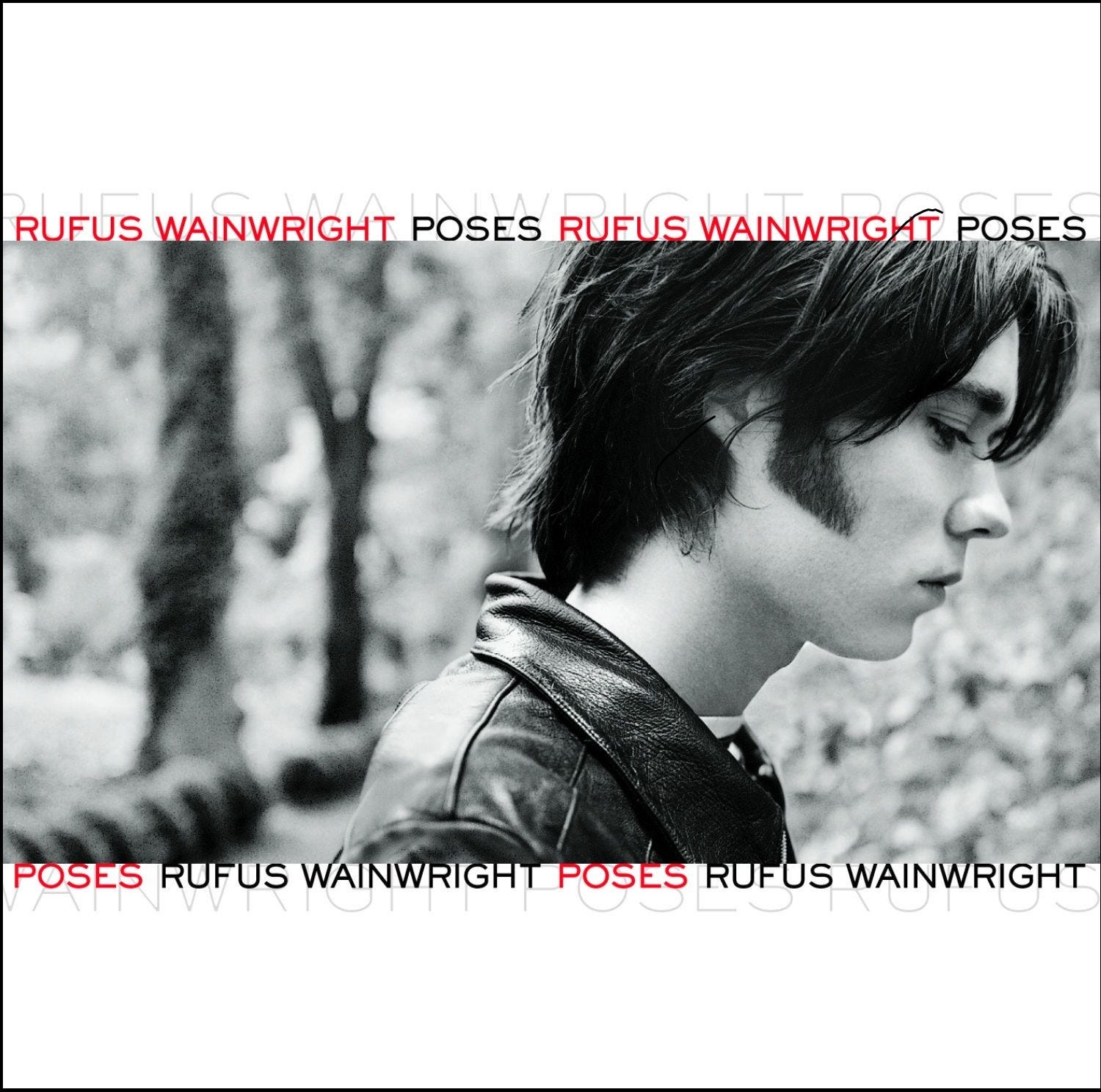
There's never been such grave a matter / As comparing our new brand name black sunglasses — Rufus Wainwright, Poses
Last year my voice broke as I started taking testosterone. I found my footing, haltingly, in a lower singing register, and have been told I have a tenor voice (I used to be an alto, consigned to yuck harmonies in the school choir). In November I sang Rufus Wainwright’s Cigarettes and Chocolate Milk a cappella at an event—it was surreal, realising I could hit his pitch. My dad used to play this song when I was a kid, and after revisiting it I listened to the whole album, 2001’s Poses. I found tracks that blistered with romance and queer wit. I watched Grey Gardens for the first time after hearing the song of the same name open with (the iconic) Little Edie’s words: It’s very difficult to keep the line between the past and the present …9 It was a perfect album to listen to as I began to move through Wellington city as a fairy, sheltered by the fur along my jaw.
The lines quoted from the title track above remind me of how it feels to meet another twink. We speak cynicism in glances, knowing we can get older men’s attention on Grindr and knowing it’s beneath us. We wear prettiness like a shield: all these poses such beautiful poses / makes any boy feel as pretty as princes. This contrast of solemnity and play is personified in the economic-downturn-battered beauty of Midland Park, Lambton Quay and Willis Street, which (along with Auckland’s Queen Street) is as close as Aotearoa gets to the New York Rufus Wainwright paints: the green autumnal parks conducting / and the city streets a wondrous chorus singing. And there’s a warning, to those of us who feel our youth will let us get away with anything—baby, you said: watch my head about it. We cannot avoid the pain of miscommunication, heartbreak, alienation and growing up. The tenderness of friendship and romantic love frays the whip of our overconfidence. But the whirlwind is fun while it lasts.

I’ve suffered quite a few times from paranoia / Oh, what’s your name? I don’t know what I should call ya — PinkPantheress, Illegal
When I was in Naarm and recovering at my house-sit from a chest infection that put me in the Royal Melbourne overnight (an incredible holiday activity) I went into a fugue state watching PinkPantheress music videos on the Smart TV. The singles off her Fancy That mixtape are so slick—I think the Tonight choreo is one of the only times I’ve appreciated the hype around a TikTok dance. That first quoted line, yes, it’s about weed anxiety, but it also gives ‘I’m literally just a girl’ in its frankness. It reminds me of a line from I Finally Understand by Charli xcx—my therapist said I hate myself really bad—which also serves as a blank-faced confession of mental illness. Like, yeah, it’s a shame. What am I, or you, weed dealer boy I’m about to hook up with, or anyone else supposed to do about it?
I love the other anxious bits and pieces across the mixtape that undercut the UKG nostalgia—there’s anticipation makes me feel like throwing up from Tonight and the gangster rap What the fuck is that? sample in Noises (the latter almost sounded like some YouTuber prank skit audio but it’s from Who Want Smoke? by Nardo Wick).10 Beneath the rave warmth there’s a sense of real city grime, as in things are getting darker in the city / please find your way out of the city in Stars. That core of sadness adds lyrical steel to banger after banger—the juxtaposition meant I couldn’t stop listening. It was great to sink into as I wandered Melbourne’s downtown, moving through the residual shock of serious illness.
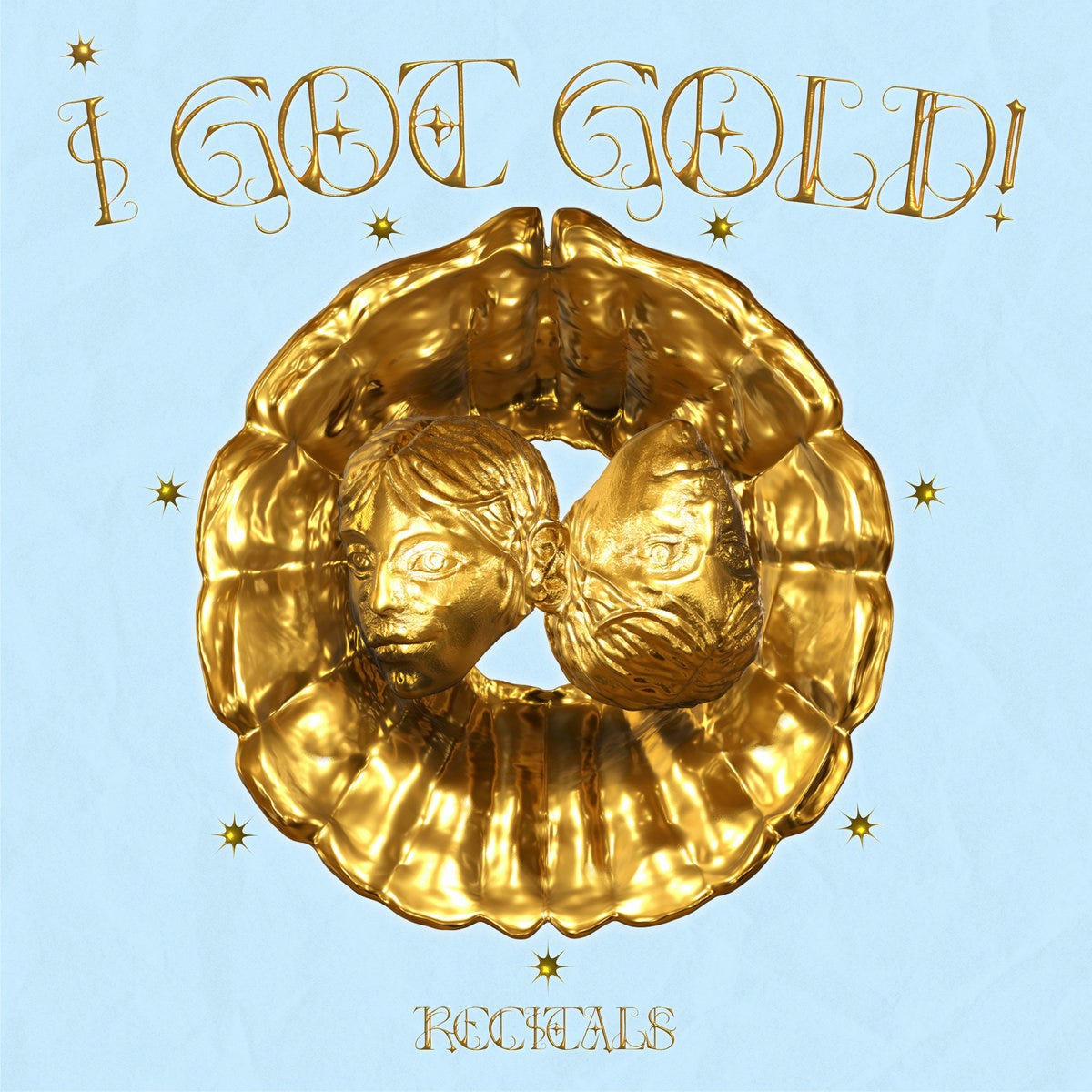
I see two bees / Over the hill they are swarming / Coming to me / Over the mist in the morning — Recitals, Wellington Song
Another ode to the city I live in—this one’s about Wellington itself! It’s from Recitals’ I Got Gold EP, which came out last year (you can buy it on Bandcamp here!).11 The song has two acts, each with a separate tempo. In the first, the whispered refrain there are a lot of stairs in the city backs a solo voice singing a separate narrative. This reminds me of hasty dashes between Lambton Quay and appointments on The Terrace, or the grind of walking between uni and my old flat in Highbury—my ill-formed knees hate Wellington. The second, slower, act, which starts out with some dream-pop synths, shows more love for the city. The distinction between lyrics and written poetry is clear here, because you miss the generous melody reading the quoted lines above, as well as the crisp ‘t’ of the singer’s mist. It’s hard to feel the mood of lyrics like walking around / my favourite places / up and then down without that—when you hear it, you can picture Wellington on one of its good days, the birds calling and the cloud hanging still on the Town Belt, giving way to sunny colour, and work, friends and coffee.
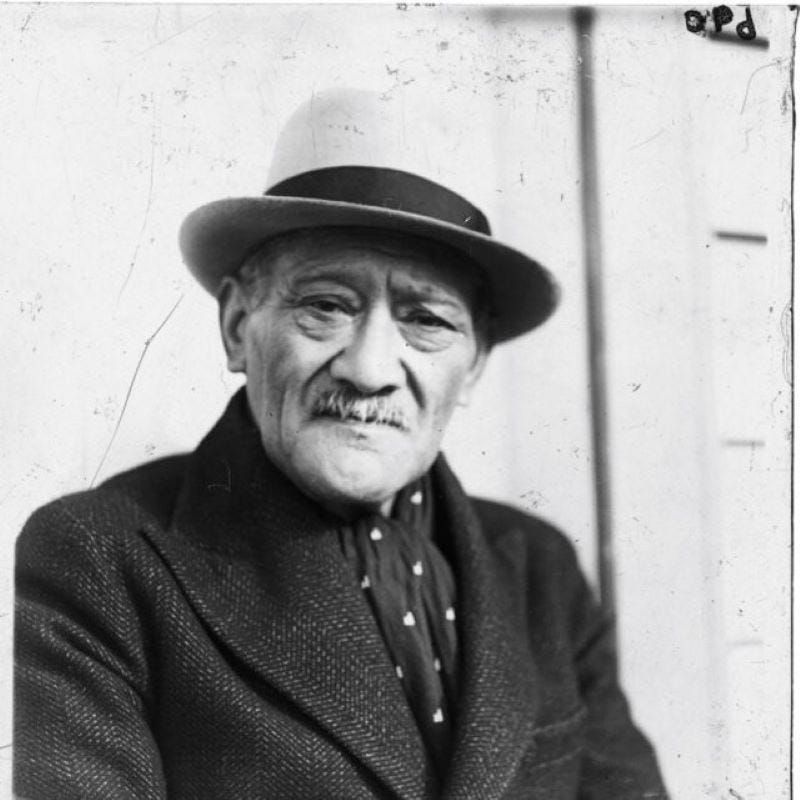
I te ao, i te pō, i te tai whati nui / Tākiri ana mai tō reo aroha — Te Urumanaao Ngāpaki, Wiremu Te Māngai
I wanted to give a shout-out to this waiata, Wiremu Te Māngai, which was taught to me and some of my coworkers by a kaiako in our workplace. It laments the passing of Tahupōtiki Wiremu “Te Māngai” (The Mouth) Rātana, founder of the Rātana faith movement, and was composed in 1940 by his wife Te Urumanaao Ngāpaki (Rātana) following his death in 1939.12 While I cannot translate the lines I’ve quoted with accuracy, I draw from these kupu an image of the loving voice of Wiremu Rātana unfurling across the day and night and through the high tide, enveloping the singer as she mourns. He taonga ēnei kupu, he taonga tēnei waiata. It is a privilege to sing this at work—not only because it’s a chance to use te reo and learn about the song’s provenance, but because it models an expression of grief. It’s rare to find space in a workplace for the sublimation (appropriate processing) of difficult feelings like that. You can watch the kapa Te Reanga Morehu o Rātana performing the song here.13
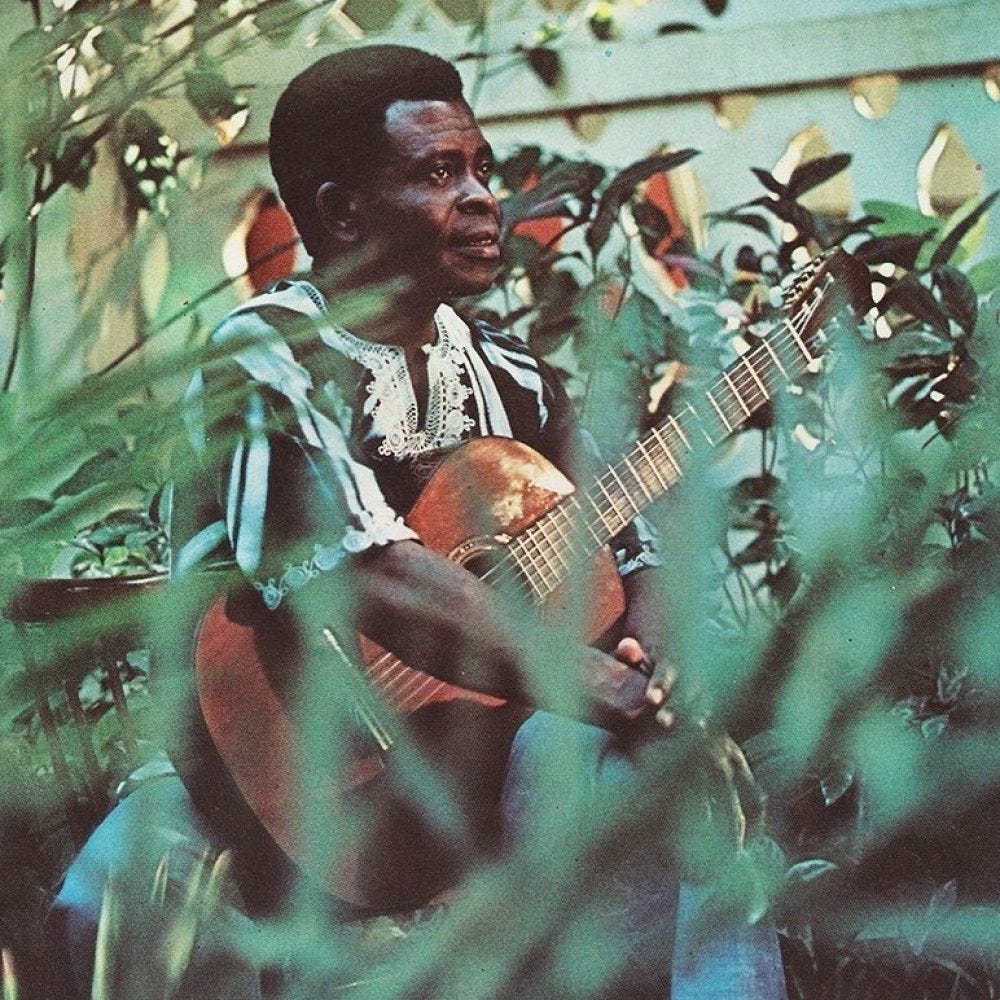
There are people in town, man / Crazy people in town / Eating bread and butter and honey / And drinking black coffee [and] cola — Francis Bebey, The Coffee Cola Song
This tune was algorithmically selected for me in Naarm, and the first time I heard it, it felt familiar—Arcade Fire sampled its Pygmy flute melody for their 2017 single Everything Now. Francis Bebey was a Cameroonian musician, author and broadcaster who mixed African instruments with electronica and began recording as early as the 1960s (there’s a lovely interview on Afropop Worldwide with his son, Patrick Bebey, who played the flute in Everything Now).14 The Coffee Cola Song is a tongue-in-cheek take on an urban middle-class, or a coloniser, or both (central African Cameroon was colonised by the Germans in 1884 and split into British and French mandates following World War One). The narrative is told from the point of view of a people disdained by the town-dwellers: they believe we are wild / just because we don't use any money / and we drink no coffee cola.
It’s a folklorish song, closer to those performance-based story-telling traditions mentioned at the top of this essay. Only in writing this have I clocked the allusion to Sing a Song of Sixpence, where the queen is in her parlour eating bread and honey. The meaning of this image seems the same across both works, achieved through Bebey’s inversion of the enlightened coloniser/savage native binary. Those coffee-and-cola drinkers are like the avaricious king and queen—if you see what they are really like, how they live, then you discover how savage they are / so much wilder than we.15 Their desire for money and their dreaming of war expose the truth of their comfortable life. Not to bring things back to Wellington, but I can’t help but think of the downtown public and our sleek clothes, boots and café habits. Our bourgeois life does feel wild in the context of the cost-of-living crisis and the priorities of our current government. I’ll expand on this in my coda below.
***
I wanted to end this post with a reflection on the essay I shared in April, A Sever Darkly, which compared the novel A Scanner Darkly by Philip K. Dick and the Apple TV show Severance. I’m disappointed in the tone I set for parts of that post, and have gone back and made some edits to it. I had wanted to talk about how surreal it felt being in a workspace that was not only physically safe, but comfortable, after experiencing several years of precarious employment and life events that did not make me feel very safe at all. I wanted to link the trauma-based derealisation I feel in the office with the psychological bizarreness, as a public servant, of working somewhere so nice that is yet required by law to be politically silent (a bizarreness heightened by knowledge of how precarious life in New Zealand is for many people). Both of these things make me feel that the safety I’m guaranteed at work is fake. Most of that got lost, however, in my exposition of the two texts, and I think the writing came across as ungracious.
I project my anxiety about living a comfortable life onto Francis Bebey’s The Coffee Cola Song because I feel guilty that I have enough when many others do not. Guilt can motivate change, but is not in itself helpful; it can be a self-indulgent distraction. I don’t want to alienate people by criticising things in a way that’s transparently a cover for my own insecurity, or complaining about my fortunate circumstances. Probably, the best thing to do is not overthink it and focus on action, neither of which are my forte. I’ve always been better at writing than doing. But that’s best explored offline between me and my therapist, and in the meantime, I’ll try to do a better job of creating things that people enjoy reading.
‘Lyric Poetry,’ Poets.org, accessed 23 August 2025, https://poets.org/glossary/lyric-poetry.
Robin Hilton, ‘10 years later, Sufjan Stevens offers a startling reevaluation of 'Carrie & Lowell',’ 27 May 2025, NPR, accessed 23 August 2025, https://www.npr.org/2025/05/27/1253209950/sufjan-stevens-interview-carrie-and-lowell.
‘The Weeping Woman,’ Wikipedia, accessed 23 August 2025, https://en.wikipedia.org/wiki/The_Weeping_Woman.
‘6 Music reveals worst pop lyrics in the world. ever!,’ 4 May 2007, BBC, accessed 23 August 2025, https://www.bbc.co.uk/pressoffice/pressreleases/stories/2007/05_may/04/lyrics.shtml.
Aimée Lutkin, ‘Jemima Kirke’s ‘What The Hell, Sure’ becomes a meme,’ 26 November 2024, Daily Dot, accessed 23 August 2025, https://www.dailydot.com/memes/what-the-hell-sure-meme-jemima-kirke/.
‘US suspends visas for Gaza residents after right-wing social media storm,’ 16 August 2025, Al Jazeera, accessed 23 August 2025, https://www.aljazeera.com/news/2025/8/16/us-suspends-visas-for-gaza-residents-after-right-wing-social-media-storm.
Tansy Oliver, ‘Pulling a learn-to-read book with six kupu Māori is another educational assault,’ 15 August 2025, The Spinoff, accessed 23 August 2025, https://thespinoff.co.nz/atea/15-08-2025/pulling-a-learn-to-read-book-with-six-kupu-maori-is-another-educational-assault.
‘Hobson’s Pledge founder wants ratepayer activist seat at table,’ 10 August 2025, RNZ, accessed 23 August 2025, https://www.rnz.co.nz/news/ldr/569542/hobson-s-pledge-founder-wants-ratepayer-activist-seat-at-table.
‘Sanctions campaign,’ Justice for Palestine, accessed 23 August 2025, https://justiceforpalestine.nz/sanctions/.
Links to the Instagram accounts of Gaza Soup Kitchen (https://www.instagram.com/gazasoupkitchen/?hl=en), Grassroots Gaza (https://www.instagram.com/grassroots_gaza/?hl=en) and The Zaynab Project (https://www.instagram.com/thezaynabproject/?hl=en).
‘Grey Gardens,’ Wikipedia, accessed 23 August 2025, https://en.wikipedia.org/wiki/Grey_Gardens.
InstaFame, ‘What the fuck is that TikTok dance challenge compilation #wtfisthat #tiktokdance #dancechallenge,’ 8 May 2021, YouTube, accessed 23 August 2025,
Recitals, ‘I GOT GOLD!,’ 27 September 2024, Bandcamp, accessed 23 August 2025,
Te Matatini Society Incorporated, 11 May 2022, Facebook, accessed 23 August 2025, https://www.facebook.com/TeMatatini/posts/wiremu-te-m%C4%81ngai-is-the-waiata-song-of-the-day-as-part-of-the-te-matak%C5%8Dkiri-sect/5287897934602343/.
Nga Waiata o Te Haahi Ratana, ‘Wiremu - TRMOR,’ 29 October 2019, Facebook, accessed 23 August 2025, https://www.facebook.com/watch/?v=1749681828500108.
‘New Revelations from the Late Francis Bebey,’ 27 May 2025, Afropop Worldwide, accessed 23 August 2025, https://afropop.org/articles/new-revelations-from-the-late-francis-bebey.
The conclusion of a sentence with a grammatical subject, we, which implies the dropped verb ‘are’, is a little joy. No shade to the use of ‘than’ as a preposition—but it’s nice to see it out in force as a subordinating conjunction in this way.